Is a Reduced Anion Gap Serious? What It Indicates and When to Be Concerned
If you used an Anion Gap Calculator and found a decreased anion gap, the result is not necessarily harmful. In many cases, it is an unexpected result that needs interpretation, not alarm. The real question is what the lab values mean in combination, whether the result fits the rest of the blood test, and whether there are symptoms or an underlying cause that should be checked.
The anion gap is a important clue in understanding the body’s acid-base balance and certain medical conditions. A low value can happen because of changes in mineral levels, especially sodium, chloride, and bicarbonate, but it can also reflect low albumin, a lab error, or less common conditions such as multiple myeloma or lithium exposure. What matters most is medical relevance: the number itself, the expected range, the patient’s symptoms, and whether repeat testing supports the result.
What’s the Anion Gap?
The anion gap is a computed value that helps healthcare providers interpret a blood test and judge how the body is keeping acid-base balance. It is based on measured electrolytes in the blood, especially sodium, chloride, and bicarbonate. Although the exact formula may vary slightly by lab, the result helps identify whether certain acids or unmeasured ions may be present.
In simple terms, the anion gap compares the positively charged and negatively charged particles in the bloodstream. A normal anion gap usually suggests a healthy state, while a high anion gap can point to conditions such as metabolic acidosis. A low value is less common, but it can still be significant depending on the broader clinical picture.
Doctors often review the anion gap as part of evaluation or diagnosis when symptoms, lab values, or the overall presentation suggest an issue. It is not a standalone diagnosis. Instead, it is a indicator that can help uncover an underlying cause.
How an Anion Gap Calculator Operates
An Anion Gap Calculator uses measured electrolyte values from a serum chemistry panel or basic metabolic panel to determine the gap. These tests often include sodium, chloride, and bicarbonate, which are the primary numbers used in the calculation. Some calculators may additionally assess whether albumin correction should be applied, since serum albumin can significantly affect interpretation.
Most calculators are easy to use: add the lab values, and the tool provides the anion gap with a quick interpretation. This can help patients and clinicians review the result with the lab’s reference range and determine if the value is typical, low, or high. Still, the calculator is only a starting point. A number alone cannot tell you the diagnosis or whether follow-up is needed.
That is why the calculator is best used as part of a broader interpretation. For example, a low number from a blood test may be meaningless if the result was due to a lab error, but it may be clinically significant if it appears with low albumin, kidney disease, or signs of toxic exposure. The best use of the tool is to support a careful review of the lab values rather than replace medical evaluation.
What Is a Low Anion Gap Mean?
A low anion gap means the derived difference between positive ions and negatively charged particles is under the expected normal range. In many cases, this happens because of low albumin, which is a key unmeasured negatively charged proteins in the blood. When albumin drops, the anion gap often drops too.
Another important possibility is lab error. Because the anion gap is a computed value, even a small measurement problem in sodium, chloride, or bicarbonate can make the result appear low. For that reason, repeat testing is often a first steps when the number does not fit the rest of the picture.
A low anion gap may also reflect changes in protein levels, unusual blood proteins, or medication effects. The clinical significance depends anion gap clinical significance on the full picture: whether there are symptoms, whether the result is persistent, and whether other labs point to an underlying cause. A single low value is often of less concern than a repeated pattern.
Is there a Reduced Anion Gap Dangerous?
Not always. A low anion gap is not necessarily dangerous, but it must not be ignored if it persists or appears with warning signs. The key issue is whether there is an related condition that needs management or if the result was a short-term or laboratory issue. In many people, the finding is benign once albumin is adjusted for or repeat testing verifies a normal value.
What renders the result more concerning is the presence of clinical symptoms such as weakness, fatigue, swelling, neurological changes, or signs of illness that suggest another process is going on. A low anion gap can also matter more if it is paired with kidney disease, unexplained inflammation, abnormal protein levels, or a medication history that raises concern for toxicity.
In short, the result itself is not usually the emergency. The concern comes from what it may signify. If the number is low but everything else is stable, a clinician may simply keep an eye on it. If it appears with other abnormal lab values or symptoms, a medical evaluation is appropriate.
Common Causes of a Low Anion Gap
A number of conditions can lead to a low anion gap, but some are much more common than others. The most frequent explanation is hypoalbuminemia, which means low albumin in the blood. Because albumin accounts for the body’s negative charge, lower protein levels can drive the gap downward.
Multiple myeloma is another important cause. This blood cancer can produce abnormal proteins that affect the calculation and may be associated with paraproteinemia, a condition in which excess monoclonal proteins circulate in the blood. These proteins can distort lab values and sometimes suggest a serious underlying disease.
Lithium can also cause a low anion gap. Because lithium is a positively charged ion, it may reduce the calculated gap, especially if levels are too high. This is why a medication review matters whenever the result seems unexpected.
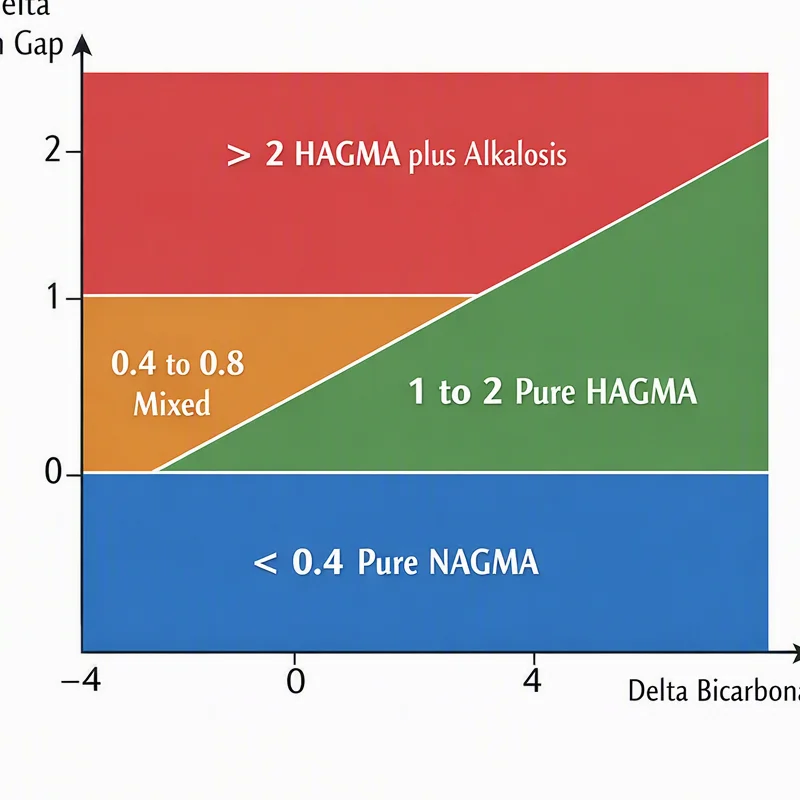
Other causes include kidney disease, certain forms of inflammation, and changes related to electrolyte delta-delta metabolic acidosis shifts. Some people have a low value because of assay interference, changes in chloride measurement, or toxic exposure. The cause is often clarified by looking at the complete panel, the patient’s history, and whether the result continues on repeat testing.
When a Low Anion Gap Is an Emergency
A low anion gap is generally not an emergency by itself, but it can become urgent when it appears with severe symptoms or evidence of a dangerous condition. Examples include significant confusion, severe weakness, trouble breathing, chest pain, fainting, or signs of major electrolyte imbalance.
Emergency concern is more serious if there is possible toxicity, especially from lithium or another substance that could affect the nervous system or heart. If a person has altered mental status, seizure, or rapidly worsening illness, the low anion gap is only one part of a broader medical problem that needs immediate assessment.
It is also urgent when the low value appears alongside alarming lab results or a rapidly changing condition. For example, a patient with kidney failure, marked dehydration, or severe acid-base disturbance may need prompt care. The rule is simple: if the symptoms are significant, do not wait for routine follow-up.
In What Way Physicians Assess a Reduced Anion Gap
Doctors usually begin with repeat tests to verify that the result is real. As laboratory error is a frequent explanation, repeating the basic metabolic panel or serum chemistry panel helps determine whether the low number persists. If it normalizes, no further workup may be needed.
If the result remains low, the next step is often albumin correction. Because low albumin can lower the anion gap, clinicians may revise interpretation based on the serum albumin level. This helps distinguish a true abnormality from one explained by hypoalbuminemia.
Physicians also review kidney status, because renal problems can influence acid-base balance and overall lab interpretation. A complete blood count may be ordered to look for anemia, infection, or other clues to the underlying cause. According to the context, additional tests may be needed to look for paraproteinemia, multiple myeloma, inflammation, or medication-related causes.
In practice, evaluation is guided by the full clinical picture. A low anion gap alone is rarely enough to make a diagnosis. It is the combination of lab values, symptoms, and history that drives the correct interpretation.
Management Depends on the Cause
There’s no single treatment for a low anion gap because the number is a clue, not a disease. Management depends on the underlying cause. When the issue is a lab error, the solution may be simply to repeat the blood test. When the cause is low albumin, treatment focuses on the reason for the low protein levels, such as malnutrition, inflammation, liver disease, or kidney loss.
Should the cause is medication-related, a medication check can identify whether lithium or another drug may be involved. Should levels are too high, the prescribing clinician may adjust the dose or stop the medication. Should the low value points to multiple myeloma or paraproteinemia, the patient may need a specialist evaluation and disease-specific care.
For people with kidney disease, treatment may involve managing renal function, fluid balance, and other electrolyte issues. In all cases, follow-up care is important because the anion gap is most helpful when tracked alongside the rest of the medical story.
Practical care often includes:
- Verifying the finding with repeat testing
- Checking serum albumin and adjusting the gap if needed
- Assessing medications and possible toxic exposure
- Reviewing kidney function and other lab values
- Looking into symptoms that suggest a broader disorder
FAQ About Low Anion Gap Results
What is considered a low anion gap?
A low anion gap is a result below the lab’s stated reference range. The exact cutoff depends on the testing method and the laboratory, so interpretation should always be based on the specific blood test report rather than a single universal number. A clinician may also consider whether the result changes after albumin correction.
Can a low anion gap be caused by lab error?
Yes. Lab error is one of the most common reasons for a low anion gap, which is why repeat testing is often recommended. Because the value is calculated from several measured electrolytes, a small problem with sodium, chloride, or bicarbonate can distort the result.
Does a low anion gap always mean a serious problem?
No. A low anion gap does not always mean something dangerous. It may be explained by low albumin, a temporary measurement issue, or another nonurgent finding. The need for concern depends on symptoms, other lab values, and whether an underlying cause is found.
What conditions are most often linked to a low anion gap?
The most common links include hypoalbuminemia, kidney disease, and sometimes abnormal proteins such as those seen with multiple myeloma or paraproteinemia. Lithium exposure can also lower the result. The right interpretation depends on the full clinical picture.
When should I talk to a doctor about my anion gap result?
You should talk to a doctor if the result remains low on repeat testing, if you have concerning symptoms, or if other labs are abnormal. A clinician can carry out symptom assessment, decide whether more testing is needed, and determine whether a doctor consultation or more comprehensive medical evaluation is appropriate.