How to Work With an Anion Gap Calculator with a CMP
Defining the Anion Gap?
The anion gap is a calculated value that is used to estimate the difference between the main electrolytes measured in blood chemistry. In practice, it is used as a fast way to check acid-base balance and spot patterns that may point to an acid-base disorder. An anion gap calculator makes this easier by turning common lab values into a result you can read in context.
At its core, the anion gap weighs positively charged and negatively charged ions, especially sodium and chloride, with bicarbonate-related values. The gap is not a direct measurement of a single substance. Instead, it reflects the presence of unmeasured anions in the bloodstream. That is why the result can provide useful clues even when the test itself is basic.
Clinically, the anion gap is most useful when looking for metabolic acidosis or other disturbances in electrolyte balance. A changed result may indicate a specific process, but it should always be interpreted alongside the full picture, including symptoms, the rest of the metabolic panel, and the patient’s history. That is the real value of an anion gap interpretation: it serves as a diagnostic tool, not a standalone diagnosis.
In what way a CMP Is Utilized in the Calculation
A complete metabolic panel is one of the primary inputs of data for this calculation. A CMP offers a broad snapshot of blood chemistry, including the key components needed to calculate anion gap. In many situations, the CMP includes sodium, chloride, bicarbonate, carbon dioxide, potassium, glucose, creatinine, BUN, and albumin.
Some clinicians also choose a BMP, which includes much of the same core information but does not always include albumin or liver-related markers. A CMP is often more useful because it adds the blood albumin value needed for a more precise interpretation. This makes the CMP especially important for a diagnostic review when acid-base findings need context.
On many reports, bicarbonate is listed separately, while carbon dioxide may appear as the measured CO2 value. In routine practice, this CO2 value is used as a stand-in for bicarbonate in the calculation. Because the result depends on correct input, it is important that the results from the CMP be reviewed carefully before applying an anion gap calculator.
Using a CMP also helps connect the anion gap to the broader electrolyte profile and metabolic panel. That broader context can improve the clinical significance of the result, especially when the pattern suggests a high-risk condition such as high anion gap acidosis.
Anion Gap Formula and Calculator Inputs
The usual anion gap formula is usually written as:
Anion gap = sodium - (chloride + bicarbonate)
Several calculators also include potassium in the formula, though many routine interpretations do not. When potassium is included, the gap may be a little higher. Because different labs and calculators may use different methods, it is important to check the stated formula before comparing results. This is why lab reference values matter so much.
Most modern anion gap calculator tools ask for a brief set of inputs from the CMP: sodium, chloride, bicarbonate or carbon dioxide, and sometimes potassium. If available, albumin can also be entered for a corrected formula. The quality of the final result depends on the accuracy of these inputs, so the calculator should be used only with verified lab values.
The practical advantage of a calculator is speed and consistency. It reduces arithmetic mistakes and helps standardize interpretation. Still, the number alone is not enough. The result should be matched with the patient’s overall anion gap range, symptoms, and other chemistry findings. In other words, the calculator is a useful shortcut, but not a replacement for clinical judgment.
Standard, High, and Low Anion Gap Results
The expected range for an anion gap depends on the laboratory’s reference interval and the method used. Many labs use a tighter range today than older textbooks once did. Because of that, the exact cutoff for a normal, raised, or low result should always be compared with the lab’s own reference interval.
A elevated anion gap generally suggests an increase of unmeasured acids or anions in the blood. This finding often raises concern for metabolic acidosis, especially when bicarbonate is low. A low anion gap is less common, but it can still be clinically important. It may reflect low albumin, certain abnormal proteins, analytical issues, or other uncommon causes.
Some key points to remember:
- A result within the usual range does not completely rule out disease.
- A high anion gap often deserves prompt evaluation in the right clinical setting.
- A low anion gap should not be ignored, especially if it repeats on a second test.
- The lab’s reference interval is more important than a single universal number.
Because interpretation depends on context, the most useful question is not simply whether the number is high or reduced, but what pattern it fits within the rest of the CMP and the patient’s acid-base status.
Correcting the Anion Gap for Albumin
Albumin correction is important because albumin is one of the main unmeasured anions in blood. When serum albumin is low, the measured anion gap may seem normal when it is not or even low. This is especially relevant in hypoalbuminemia, where the raw number can miss the true acid burden.
A corrected anion gap adjusts the calculated value to compensate for low albumin. While formulas can vary slightly, the idea is simple: if albumin is decreased, the observed gap should be adjusted upward to more accurately represent the actual state of the blood. This makes the interpretation more accurate, especially when assessing metabolic acidosis.
Why does this matter? Because albumin carries negative charge, and changes in protein levels affect the visible balance of ions. Without correction, a patient with significant acidosis and hypoalbuminemia could be mistaken as having a normal result. That is why albumin correction is part of a thoughtful, decision-oriented approach to the anion gap interpretation.
In practice, a CMP that includes albumin gives the best starting point for this adjustment. If albumin is low, the clinician should consider the corrected value rather than relying only on the raw using osmolar and anion gaps result. The corrected formula is especially helpful when the presentation suggests a high-risk acid-base problem but the initial gap seems unexpectedly ordinary.
What High Anion Gap May Indicate
A higher result is often linked to metabolic acidosis and the buildup of acids in the body. This is often called high anion gap acidosis. The key point is that unmeasured acids go up while bicarbonate decreases, causing the calculated gap to rise. The key causes usually fall into a few broad categories.
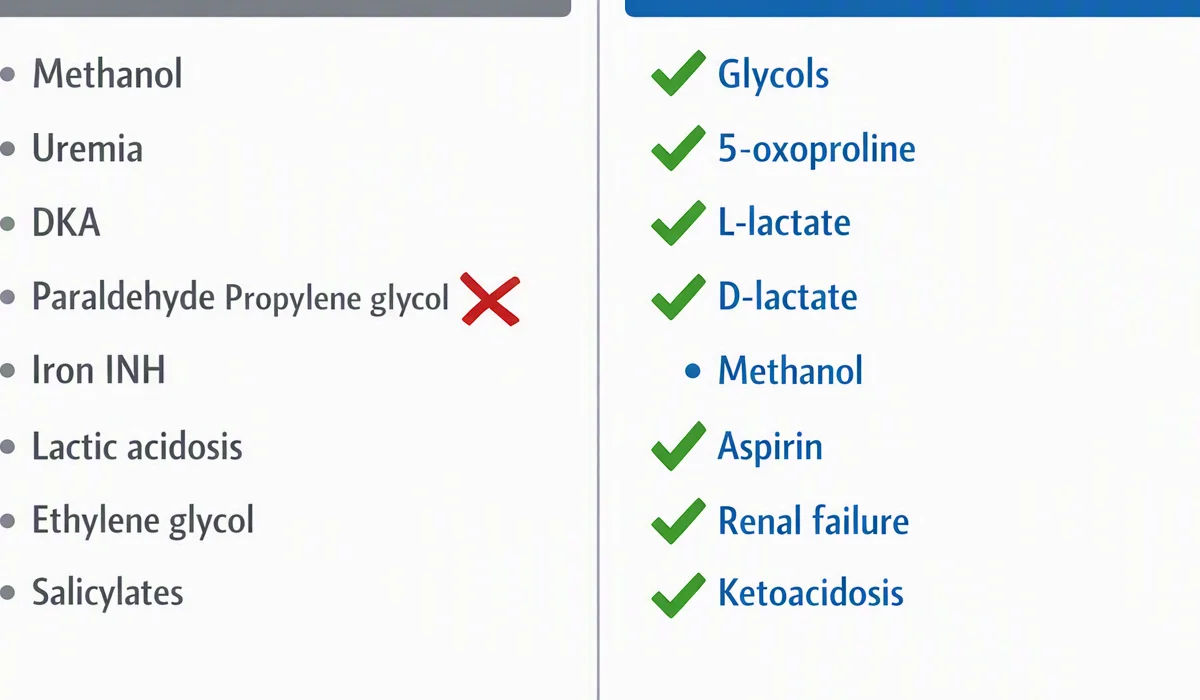
One common cause is lactic acidosis, which can happen when tissues do not receive enough oxygen or when metabolism is severely stressed. Another is ketoacidosis, where ketones accumulate, often in settings of uncontrolled diabetes, prolonged fasting, or other metabolic stress. A third major category is renal failure, where the kidneys cannot clear acids effectively.
Other causes are possible, but these three are among the most important to recognize quickly. A high result should be interpreted along with symptoms, glucose, creatinine, BUN, and the broader clinical picture. If the patient is ill, the elevated gap may point to a serious acid-base disorder that needs urgent attention.
Clues that may suggest a high-gap process include:
- Low bicarbonate or CO2 on the CMP
- High glucose in suspected diabetic ketoacidosis
- Increased creatinine or BUN suggesting impaired kidney function
- Symptoms of poor perfusion, dehydration, or severe illness
In short, an elevated number does not name the cause by itself. It signals that the body anion gap clinical significance may be accumulating acids, and the next step is to identify which condition is responsible.
How Low Anion Gap Can Mean
The low value is not as common than an elevated one, but it can still be meaningful. The leading reason is low albumin, but other causes should be considered when the result is unexpectedly reduced. In some cases, the issue is not physiologic at all but due to laboratory error.
Particular medical causes may include hypermagnesemia and hypercalcemia, both of which can affect the electrical balance in blood. A low anion gap can also be seen with multiple myeloma, where abnormal proteins alter the measured relationship between cations and anions. These protein-related changes can make the calculated gap seem lower than expected.
Before making assumptions, it is wise to repeat the test if the result is surprising. A single outlier can result from specimen handling, measurement issues, or reporting problems. This is where awareness of laboratory error matters. If the value remains low on repeat testing, the result deserves a more careful medical evaluation.
Main points for a low result:
- Start with albumin
- Consider hypermagnesemia and hypercalcemia
- Look for protein disorders such as multiple myeloma
- Repeat testing if the value seems inconsistent with the clinical picture
How to Interpret Results with Other CMP Markers
The anion gap becomes far more useful when considered with other CMP markers. A lone result can indicate a direction, but the rest of the panel provides the context needed for accurate interpretation. This is why a CMP-based approach is more useful than relying on the gap alone.
Glucose is important because abnormal elevation may support diabetic ketoacidosis when the anion gap is high. Creatinine and BUN help assess kidney function, which is essential when considering renal failure as a cause of metabolic acidosis. If creatinine and BUN are elevated, the high gap may suggest impaired acid clearance.
Liver enzymes can also provide important clues. While they do not calculate the anion gap directly, they may reveal liver injury or systemic illness that affects overall metabolism. If the CMP shows multiple abnormalities at once, the pattern may be more revealing than the anion gap in isolation.
Consider the following interpretive approach:
- Check sodium, chloride, and bicarbonate first
- Check glucose for possible ketoacidosis patterns
- Review creatinine and BUN for kidney-related causes
- Look at liver enzymes and albumin for broader metabolic context
This is the most effective way to turn a basic calculation into a relevant clinical pattern. The result is not just a number; it is a clue within a larger diagnostic toolset.
When to Seek Medical Follow-Up
An abnormal result should be discussed with a doctor, especially if it matches concerning symptoms. Possible warning signs may include nausea, vomiting, confusion, weakness, shortness of breath, rapid breathing, or marked fatigue. These symptoms can accompany serious changes in acid-base balance and should not be ignored.
If the anion gap is significantly abnormal and the patient feels unwell, prompt evaluation may be needed. In some cases, urgent care or emergency assessment is appropriate, particularly if the person has diabetes, kidney disease, poisoning risk, severe dehydration, or unexplained altered mental status. The decision depends on the full situation, not the calculator result alone.
A helpful guideline is to consider the calculator as a preliminary interpretation aid, not a final diagnosis. It can highlight a possible metabolic problem, but a clinician must relate it with symptoms, history, and other lab findings. That is especially relevant when the pattern suggests high anion gap acidosis or when a low result could reflect hidden hypoalbuminemia or laboratory error.
If you are not sure how to read the result, a medical evaluation is the safest next step. A doctor can determine whether the finding is anticipated, needs repeat testing, or requires immediate treatment.
Frequently Asked Questions
How do you calculate the anion gap from a CMP?
Take the CMP values for sodium, chloride, and bicarbonate or carbon dioxide. The common formula is sodium minus the sum of chloride and bicarbonate. Many people use an anion gap calculator to prevent arithmetic mistakes and to check the result with the correct reference range.
What is a normal anion gap on a blood test?
A normal anion gap depends on the lab’s reference range and the formula used. Different labs may report slightly different values, so the most accurate answer is the range printed with the blood test result. Always compare the number with the lab’s own reference range.
Why do you correct the anion gap for albumin?
You correct it because low albumin can make the calculated gap look falsely low or normal. The corrected anion gap gives a more accurate view of acid-base status when hypoalbuminemia is present. This is especially important when the clinical picture suggests a hidden metabolic acidosis.
What does a high anion gap mean?
A high result often indicates metabolic acidosis caused by excess acids in the blood. Common causes include lactic acidosis, ketoacidosis, and renal failure. The exact cause depends on the rest of the CMP, the symptoms, and the medical context.
Can a low anion gap be caused by lab error?
Certainly. Lab error is a possible explanation for a low result, especially if it doesn’t match the rest of the CMP or the patient’s condition. If the number is unexpected, running the test again and checking the full panel, including albumin and other blood chemistry values, is a good next step.