Anion Gap Calculator with Albumin Correction
How the Anion Gap Measures
The anion gap is a practical way to assess the relationship of charged particles in the blood, especially when reviewing acid-base balance. It is derived from standard serum electrolytes and helps clinicians calculate anion gap values as part of a more complete metabolic acidosis evaluation. In most cases, the calculation uses sodium, chloride, and bicarbonate from an electrolyte panel.
This number is not a direct measurement of acids. Rather, it approximates the amount of unmeasured anions in the blood. Those unmeasured substances can accumulate in metabolic acidosis, making the anion gap a useful diagnostic tool for detecting unexpected acidosis. It is especially important when reviewing serum bicarbonate level changes that may point to an acid-base problem even before the full picture is obvious.
The anion gap is often used to help interpret lab results when the cause of acidosis is not obvious at once. A high value can suggest extra acids in the blood, while a normal value can indicate other forms of acid loss or replacement. Because the calculation is based on routine serum electrolytes, it is widely available and easy to follow over time.
Reasons Why Albumin Changes the Anion Gap
Albumin is among the main protein bound anions in plasma, so it has a meaningful effect on the observed anion gap. When albumin is low, the gap may appear smaller than it really is because fewer negatively charged proteins are present to contribute to the total. This is why hypoalbuminemia can obscure a real acid-base problem.
To account for this, clinicians use albumin correction to calculate a corrected anion gap. This adjusted value is often called the albumin adjusted anion gap. It helps correct for albumin so that the result better captures the actual presence of unmeasured anions.
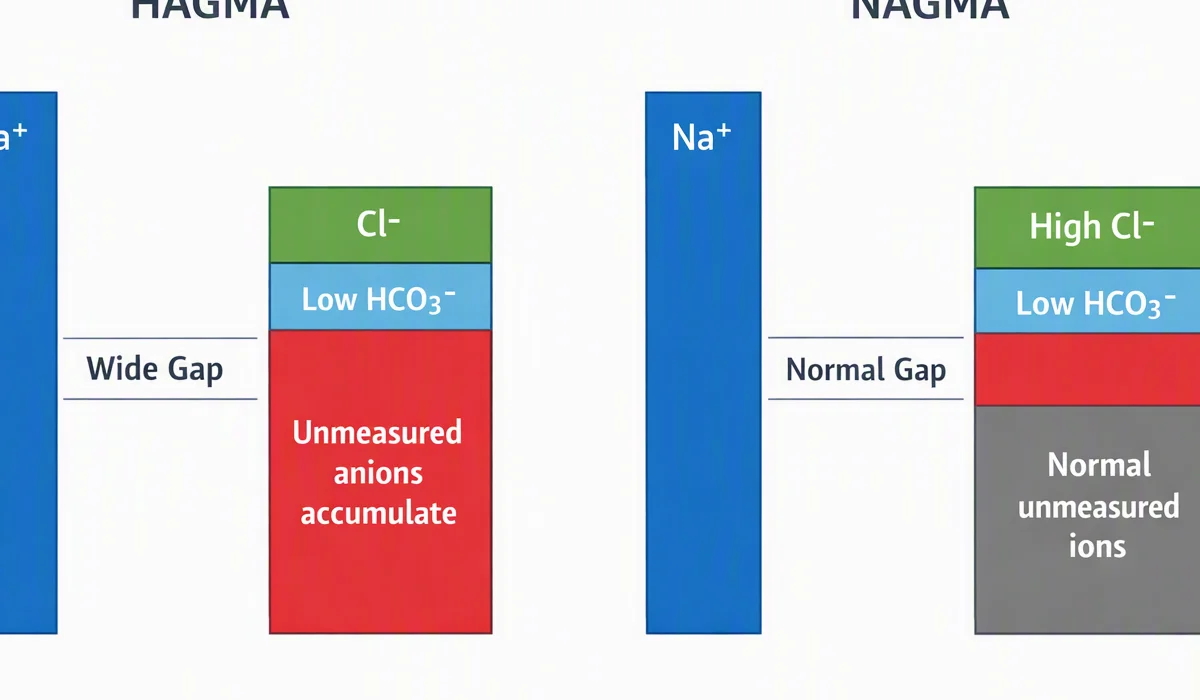
This correction matters because a normal-looking anion gap may not be truly normal when albumin is reduced. In patients with low serum albumin level, the uncorrected number can downplay the severity of metabolic acidosis. That means albumin adjustment improves the usefulness of the result for clinical interpretation and may improve diagnostic accuracy.
In short, albumin changes the anion gap because it is a major contributor to the negative charge in plasma. If albumin falls, the measured gap often falls too, even when the underlying acid-base disorder has not improved.
How to Operate an Anion Gap Calculator
An Anion Gap Calculator makes easier the task of calculating and adjusting the gap. To work with it, you usually enter the values for sodium, chloride, bicarbonate, and albumin. The calculator then applies the anion gap formula and, when needed, the albumin adjustment automatically.
The basic workflow is simple:
- Input the sodium value from the lab report.
- Add chloride and bicarbonate values.
- Enter the albumin value if albumin correction is needed.
- Review the calculated anion gap and the corrected anion gap.
- Contrast the result with the reference range used by the lab.
This process helps clinicians and learners interpret lab results quickly, especially when evaluating acid base status. It also minimizes arithmetic mistakes and promotes faster recognition of electrolyte imbalance patterns. For practical use, the calculator serves as a fast diagnostic tool that can help screen for hidden acidosis.
When reviewing the result, remember that the calculator is only one part of the overall picture. The numbers must still be interpreted in context with the patient’s symptoms, history, and other laboratory findings.
Gap Calculation with Albumin Correction Formula and Step-by-Step Calculation
The usual anion gap formula is:
Anion gap = sodium − (chloride + bicarbonate)
This value is generally reported in mmol/L. The specific reference range can change by laboratory method, but the calculation itself is straightforward and widely used.
To apply albumin correction formula, a frequently used approach is to https://ameblo.jp/anion-gap-tracker676/entry-12977185370.html add a correction factor based on the patient’s albumin level. One traditional method adds approximately 2.5 mmol/L to the anion gap for every 1 g/dL decrease in albumin below normal. The specific method may vary by institution, so the laboratory reference range and local practice should always be checked.
Here is a practical step-by-step method:
- Compute the initial anion gap using sodium, chloride, and bicarbonate.
- Assess the serum albumin level.
- When albumin is low, use the albumin correction.
- Interpret the albumin adjusted anion gap in mmol/L.
- Compare both the raw and corrected values with the expected reference range.
Calculation example: If sodium is 140 mmol/L, chloride is 104 mmol/L, and bicarbonate is 20 mmol/L, the uncorrected anion gap is 16 mmol/L. If albumin is low, the corrected anion gap may be higher after adjustment, which could change the interpretation from borderline to clearly abnormal. For this reason the calculator is helpful for both teaching and bedside clinical interpretation.
The purpose is not only to produce a number. It is to make the acid-base analysis more accurate by accounting for changes in protein bound anions that alter the baseline.
Explaining High, Normal, and Low Anion Gap Findings
A high result often indicates high anion gap metabolic acidosis, which means extra acids or unmeasured anions are accumulating. This pattern usually calls for a careful search for the cause, especially if the bicarbonate is low and symptoms match the pattern.
A normal result does not always rule out a problem. Normal anion gap metabolic acidosis can occur when bicarbonate is removed and replaced by chloride, leaving the calculated gap unchanged. In these cases, the acid-base disturbance is real, but the gap is not elevated. That is why the full lab pattern matters so much in clinical interpretation.
A low anion gap is less common but still important. It can occur with low albumin, lab variation, or unusual positively charged substances. A low value should not be ignored, especially if the patient has other signs of electrolyte imbalance or a broader acid-base problem.
In practice, the interpretation depends on the relationship between the gap, bicarbonate, chloride, and albumin. This is where the Anion Gap Calculator becomes particularly helpful because it helps tell apart a truly normal value from one that only appears normal because of hypoalbuminemia.
Main interpretation points include:
- Elevated gap: look for extra acids and metabolic acidosis.
- Within-range gap: think about bicarbonate loss or chloride replacement.
- Decreased gap: check albumin, method issues, and unusual lab patterns.
Common Causes of Altered Anion Gap
Many disorders are closely linked to abnormal anion gap values. Some raise the gap because they introduce acid into the blood, while others reduce it indirectly by changing the protein or electrolyte balance.
Lactic acidosis is a well-known cause of high anion gap metabolic acidosis. When tissues are underperfused or oxygen delivery is impaired, lactate accumulates and the gap rises. This is frequently observed in severe illness and is a major reason clinicians use the anion gap as part of metabolic acidosis evaluation.
Ketoacidosis is a further common cause. In diabetic, alcoholic, or starvation states, ketone bodies add to the pool of unmeasured anions, elevating the gap. A high value in this setting often confirms the diagnosis when the rest of the data fit.
Renal failure can also increase the gap because the kidneys do not eliminate acid efficiently. As acids accumulate, the bicarbonate falls and the gap may increase. This makes the anion gap a helpful clue in chronic or acute kidney dysfunction.
Toxic alcohols are a key cause to consider. Certain ingestions produce organic acids that elevate the gap and can cause dangerous acid-base derangements. In such cases, the anion gap may provide an early alert signal that requires urgent attention.
Further causes can include severe tissue hypoperfusion, sepsis, or mixed toxic exposures. Because multiple processes can overlap, the calculator should be used as part of a broader clinical interpretation rather than as a standalone answer.
When to Correct the Anion Gap for Albumin
Albumin-based correction is most useful when hypoalbuminemia is present. In patients with low albumin, the uncorrected anion gap may downplay the degree of acid accumulation, leading to missed or delayed recognition of metabolic acidosis.
Albumin correction is most useful in critical illness, where albumin commonly falls and acid-base disorders are frequent. In this setting, relying on the raw number alone can weaken diagnostic accuracy. The adjusted value gives a better view of the true acid-base status and can help identify a hidden gap that would otherwise be overlooked.
It is also useful when the clinical picture suggests acidosis but the measured gap looks normal. In such cases, albumin adjustment can help clarify the discrepancy and improve acid-base disorders assessment. This is one reason the calculator is often used to screen for hidden acidosis.
Cases where albumin correction is often helpful include:
- Decreased serum albumin level
- Critical illness
- Unclear acid-base balance abnormalities
- Suspected unexpected acidosis with a borderline gap
In short, if albumin is low, the corrected value is usually the more meaningful clinical measure than the uncorrected one.
Limitations and Clinical Caveats
Although the anion gap is valuable, it has significant limitations. Multiple labs may use distinct measurement methods, which means lab variability can influence the result. A value that is normal in one setting may not be normal in another, so the local reference interval is important.
Another major caveat is the chance of a mixed acid-base disorder. A patient may have more than one process at the same time, such as a high-gap acidosis plus a metabolic alkalosis. In that situation, the bicarbonate and anion gap may not behave in a simple way, and careful analysis is needed.
Likewise, a broader electrolyte imbalance can complicate the interpretation. Changes in sodium, chloride, or bicarbonate can shift the number even when the underlying clinical condition is complex. That is why the gap should always be interpreted alongside the full chemistry panel and clinical picture.
Other caveats include unusual proteins, analytical differences, and the fact that albumin correction is an estimate rather than a perfect measurement. The adjusted result is helpful, but it is still only one part of a full acid-base evaluation.
Best practice is to use the calculator as a guide, then confirm the pattern against symptoms, history, and related laboratory findings. That approach strengthens confidence in the final clinical interpretation.
Frequently Asked Questions
What is an anion gap calculator used for?
An Anion Gap Calculator is used to calculate and interpret the anion gap from common serum electrolytes. It helps clinicians evaluate acid-base balance, identify metabolic acidosis, and detect a possible hidden acid load when the routine lab pattern is not obvious.
How do you correct the anion gap for albumin?
To correct for albumin, first calculate the raw gap using sodium, chloride, and bicarbonate. Then apply an albumin correction factor based on the patient’s serum albumin level. Because low albumin lowers the measured gap, the adjustment produces a more precise corrected anion gap.
What’s a normal anion gap interval?
The normal anion gap range depends on the laboratory’s method and reference interval. This is why it is necessary to assess the result using the local laboratory reference range rather than using one universal number. The calculator allows you to compare the result with the relevant interval.
Why can low albumin reduce the anion gap?
Albumin is a key source of negative charge in the blood because it contains bound anions. When albumin is low, there are less negative charges contributing to the gap, so the measured value falls. This is why hypoalbuminemia can make the gap seem falsely unchanged or low.
What disorders cause a high anion gap?
Frequent causes of a high gap include lactate acidosis, ketoacidosis, renal failure, and poisonous alcohols. These conditions raise unmeasured negative ions and often produce anion gap metabolic acidosis. The exact cause should be identified by the full clinical picture and supporting labs.