Anion Gap Calculator for Laboratory Science: Interpreting the Results
What the Anion Gap Measures in Blood Chemistry
The anion gap is a computed value used in clinical chemistry to support the interpretation of electrolytes and assess acid-base balance. It shows the difference between major measured cations and anions in the blood, mainly sodium and chloride, with bicarbonate included in the comparison. Because routine testing does not directly measure every ion in circulation, the anion gap may indicate the presence of unmeasured anions and other shifts in the body’s buffering system.
In practical lab interpretation, the anion gap is a supportive measure rather than a stand-alone diagnosis. It is often used to assess a possible acid-base disorder, especially when a clinician is trying to determine whether a metabolic disturbance is present. A normal result suggests the measured ions are balanced in a way that fits the expected electroneutrality of plasma, while an abnormal result can point to an electrolyte imbalance or hidden acids that are not obvious from the basic panel alone.
How an Anion Gap Calculator Works
An Anion Gap Calculator uses a straightforward formula to the values entered from a lab report. Many calculators use serum sodium, serum chloride, and serum bicarbonate, and some also include potassium. The calculator then returns a computed value that assists lab interpretation by revealing whether the measured ions suggest an acid-base issue.
In the usual approach, the calculator subtracts chloride and bicarbonate from sodium. If potassium is included, the formula may change slightly, but the basic idea is the same: weigh major measured ions against the expected balance. Because the result is a derived value, its meaning depends on the surrounding serum electrolytes, the patient’s clinical state, and the interpretive context of the rest of the report.
This makes the calculator valuable as a diagnostic marker in clinical chemistry. It does not substitute for direct testing or clinical judgment, but it helps identify whether the lab result may reflect an anion deficit, anion excess, or a broader metabolic disturbance.
Conventional Anion Gap Formula and Normal Range
The standard anion gap formula is commonly written as:
Anion gap = sodium − (chloride + bicarbonate)
Certain laboratories also use a potassium-inclusive version, but the sodium-based version anion gap clinical significance is the most generally accepted in everyday lab science. The result is then compared with a normal range or reference interval provided by the laboratory performing the test.
The exact reference interval can differ because different instruments, reagents, and reporting methods may produce slightly different values. That is why the result should always be interpreted against the lab’s own serum chemistry panel reference interval rather than relying on a universal cutoff. A result that appears abnormal in one lab may remain within another lab’s normal range.
From a lab science perspective, the anion gap is a helpful summary of the relationship between measured ions and unmeasured ions. It is not a direct measurement of acid or base, but rather a calculated clue that may indicate the need for additional testing, including a blood gas or additional chemistry studies.
Adjusted Anion Gap for Albumin
Albumin is a major unmeasured anion in blood, so low albumin can reduce the apparent anion gap. This is why many clinicians and laboratorians evaluate a corrected anion gap when the patient has hypoalbuminemia. Without albumin correction, the result may miss the presence of an acid load.
The corrected value is especially helpful in patients with illness, inflammation, malnutrition, liver disease, or fluid shifts that reduce albumin concentration. In these cases, the unadjusted anion gap may look normal even though a true acid-base problem exists. An albumin-adjusted interpretation may uncover the hidden contribution of the reduced protein buffer.
For lab interpretation, albumin correction improves the usefulness of the anion gap as a diagnostic aid. It strengthens the connection between the numeric result and the patient’s real metabolic state. In other words, the corrected anion gap provides better interpretive context when low albumin could otherwise mask clinically important changes.
High Anion Gap versus Low Anion Gap
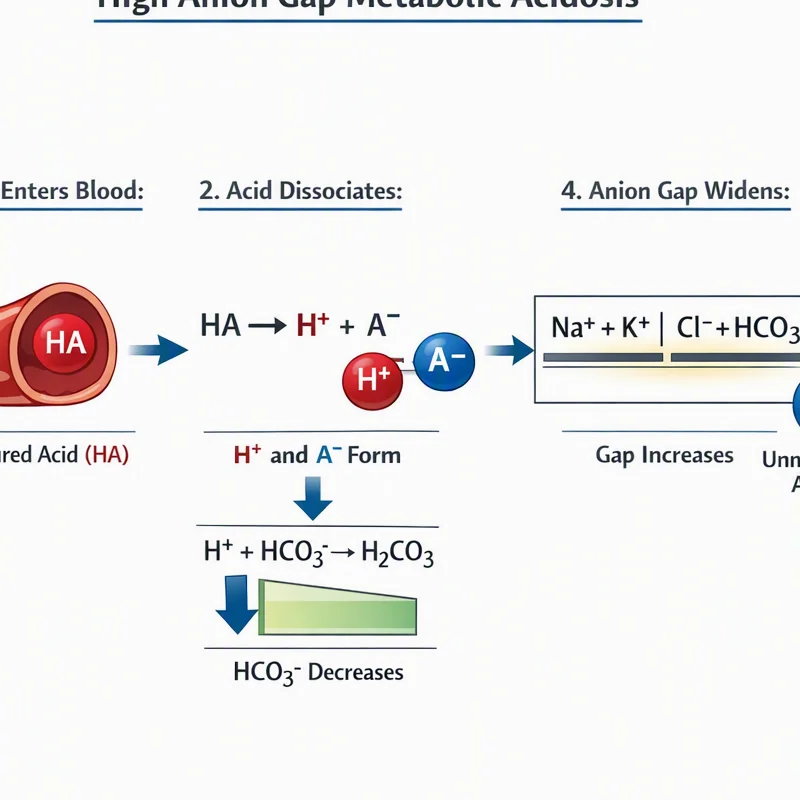
A raised anion gap usually indicates an increased amount of acid or accumulation of unmeasured anions. This pattern is often linked to metabolic acidosis, where bicarbonate is used up as the body buffers acid. A high value is a signal that the balance between measured ions and unseen ions has shifted in a meaningful way.
A low anion gap is less common and can be caused by lab or physiologic factors. It may reflect low albumin, abnormal proteins, or analytical issues, among other possibilities. Because the low result can be subtle, it is important to check the numbers and review the broader electrolyte panel before drawing conclusions.
Both patterns require thorough lab interpretation. A high result often suggests added acids, while a low result may indicate reduced negative charge from albumin or testing-related issues. Either way, the value should be read as part of the full clinical picture rather than as an isolated finding.
Typical Causes of an Abnormal Anion Gap
Several conditions can move the anion gap away from the expected value. One of the most important is lactic acidosis, in which lactate builds up as tissues create energy under stress or inadequate oxygen availability. Another common cause is ketoacidosis, where ketone production increases and introduces additional acids to the blood.
Renal failure can also lead to an abnormal result because the kidneys are less able to remove acid and preserve normal electrolyte handling. As retained acids and related compounds build up, the gap may climb. In addition, toxins can produce a high anion gap by bringing in unusual acids or by interfering with metabolism in ways that increase acid load.
All of these causes fit the same basic pattern: the body accumulates unmeasured ions or loses buffering capacity, and the calculated value rises. In the lab, this makes the anion gap a useful clue in distinguishing one metabolic disturbance from another.
How to Use the Calculator in Steps
Using an Anion Gap Calculator is easy when the lab values are available. Start by identifying the input values from the report, then enter the serum sodium, serum chloride, and serum bicarbonate. When available, include potassium as well.
After entering the numbers, review the calculated result and compare it with the lab’s reference range. When the tool provides a corrected output, enter the albumin value so the tool can estimate the corrected anion gap. This matters especially when hypoalbuminemia is present.
Once the calculation is complete, interpret the result in context. A single number does not diagnose an acid-base disorder by itself. Instead, use it as part of a wider assessment that includes the electrolyte panel, the serum chemistry panel, and any other available clinical information.
Clinical & Laboratory Reading Tips
Effective medical interpretation begins with checking whether the result matches the broader picture of acid-base balance. When the anion gap is elevated, watch for signs of metabolic acidosis and consider whether the patient may have lactic acidosis, ketoacidosis, renal failure, or toxin exposure. If it the value is low, review albumin, total protein, and the possibility sepsis AG differential of analytical variation.
A blood gas can be very helpful because it offers direct information about pH, carbon dioxide, and bicarbonate handling. When paired with the anion gap, it gives a stronger view of whether there is a true acid-base disorder and whether compensation is occurring. This combination is often more revealing than any one lab result alone.
It is also important to account for analytical pitfalls. Small shifts in measured ions can change the calculated value, and differences between instruments can affect the reported reference interval. For this reason, the anion gap should be interpreted alongside the electrolyte panel, the serum chemistry panel, and the patient’s clinical status. That approach supports diagnostic clarity and reduces the risk of overcalling or missing an abnormality.
Anion Gap Calculator FAQs
What is an anion gap calculator used for?
An Anion Gap Calculator is used to determine the anion gap from lab values and help evaluate electrolyte balance, acid-base balance, and possible metabolic acidosis. It is a diagnostic aid that supports lab interpretation by highlighting changes in measured ions and unmeasured ions.
What is the normal anion gap range?
The normal range depends on the laboratory and its reference interval. Different methods and instruments can produce different expected values, so the result should always be compared with the range reported on the specific serum chemistry panel.
Why does low albumin affect the anion gap?
Albumin is a major unmeasured anion, so hypoalbuminemia can lower the measured anion gap. That is why an albumin correction or corrected anion gap is often needed to avoid missing an underlying acid-base disorder.
What can cause a high anion gap?
A high anion gap is commonly associated with lactic acidosis, ketoacidosis, renal failure, and certain toxins. These conditions increase unmeasured anions or reduce the body’s ability to maintain acid-base balance.
Should an anion gap be interpreted with other lab results?
Yes. The anion gap should always be interpreted with the electrolyte panel, blood gas, albumin, and the rest of the clinical picture. This broader approach improves clinical interpretation and helps distinguish a true metabolic acidosis from other lab patterns.