Anion Gap Calculator and Typical Range Described
Defining the Anion Gap?
The anion gap is a valuable number used in blood test interpretation to assess the relationship between the key electrolytes in the blood. It is not a separately measured value. Instead, it is derived from common lab results such as sodium, chloride, and bicarbonate. Because it reflects the contrast between measured ions and unmeasured anions, it can serve as a practical diagnostic clue when evaluating an acid-base disorder or broader metabolic disturbance.
In plain terms, the anion gap gives a picture of physiologic balance. A normal result suggests that the primary charged particles in the blood are in appropriate proportions, while an abnormal result may point toward a condition that needs further evaluation. Clinicians often use it as part of an electrolyte panel or a larger serum chemistry panel to help detect the cause of an unexpected lab pattern.
Although the number itself is small, its meaning can be clinically significant. It is especially useful when a patient has symptoms or lab findings that suggest metabolic acidosis. That is why the anion gap remains a practical tool in modern medical evaluation and interpretive guidance.
How the Anion Gap Calculator Operates
An anion gap calculator employs a typical calculation formula based on values from a serum chemistry panel. The calculator generally takes the sodium level, chloride level, and serum bicarbonate value and merges them into one result. In many labs, the common formula is:
anion gap = sodium - (chloride + bicarbonate)This simple equation helps determine the gap between measured positive and negative charges. Since the blood contains many ions that are not routinely measured, the gap can reflect shifts in those hidden components. The calculator is useful because it turns routine lab numbers into a clearer interpretation of acid-base status.
Depending on the lab and reporting method, the exact result may differ slightly. That is why the calculator should always be read alongside the lab’s own lab reference and the full clinical picture. The result does not diagnose anion gap clinical significance a condition by itself. Instead, it acts as one part of a wider review of blood test results.
Some calculators also use albumin because this protein affects the gap. When albumin is low, the raw number may underestimate the true level of metabolic change. In that situation, a corrected value may provide better blood test interpretation and more accurate interpretive guidance.
Normal Anion Gap Range
The normal range for anion gap may vary a little from one lab to another, which is why the reference range should always be checked against the specific laboratory values reported on the test. In many settings, the normal range is roughly in the single digits to low teens, but the exact limits depend on the method applied by the lab.
Because different instruments and reporting approaches are applied, one lab may define a result as normal while another may call the same result borderline. This is why a single number should never be interpreted in isolation. The lab’s reference range provides context for whether the result is within expected limits.
Albumin also affects what is considered normal. Since albumin is a major unmeasured anion, lower levels can reduce the measured anion gap even when the underlying acid-base picture is not truly normal. That is one reason a result may need albumin correction before it is fully understood.
For practical use, the best way to read the number is to compare it with the lab’s stated range and then ask whether the patient’s symptoms, medications, and other chemistry results fit the pattern. A value outside the expected range is not automatically dangerous, but it does call for review, especially if it matches other signs of illness.
Elevated Anion Gap Causes
A elevated anion gap often suggests an acid-base imbalance, meaning the body has accumulated acids or lost enough bicarbonate to change the balance. This is one of the most common reasons the anion gap is ordered in the first place. It allows clinicians determine whether the acid-base problem is related to added acids rather than a simple loss of base.
Common causes include lactate buildup, ketone buildup, and renal failure. In lactic acidosis, the body produces too much lactate, often because tissues are not getting enough oxygen or because of another major illness. Ketoacidosis may occur when the body breaks down fat heavily and produces ketones, which raise acid load. Renal failure can reduce the kidneys’ ability to clear acids, allowing them to collect in the bloodstream.
Other possible contributors exist, but these are some of the most important patterns to recognize. A high result is a strong clue that there may be an acid-base disorder needing prompt review. It is especially useful when paired with a serum bicarbonate that is low, since that combination often supports a diagnosis of metabolic acidosis.
The key point is that a high value does not tell the whole story by itself. It should be interpreted alongside symptoms, the complete electrolyte picture, and any other chemistry abnormalities. A clinician will often use it to refine the differential diagnosis and decide what additional tests are needed.
Low Anion Gap Causes
A decreased anion gap is less common than a high result, but it can still be important. One of the most frequent explanations is hypoalbuminemia, since reduced albumin levels lowers the amount of unmeasured negative charges in the blood. As a result, it can make the calculated gap appear reduced than expected even if the rest of the chemistry panel looks normal.
Another possible reason is multiple myeloma, a condition in which abnormal proteins may alter the charge balance in the blood. Because the anion gap reflects unmeasured ions and proteins, abnormal protein production can affect the result. This makes the gap a useful, though inexact, clue delta ratio number calculator in certain cases.
Lab error is also worth considering. Mistakes in specimen handling, instrument calibration, or reporting can produce a misleading number. When the result does not align with the rest of the clinical picture, repeating the test may be the most straightforward and most useful next step.
Elevated calcium can also contribute in some cases by changing the overall ionic environment. While this is not the usual explanation, it belongs on the list of possibilities when reviewing a low reading. As with any abnormal value, the result should be considered in context rather than viewed alone.
In what way does Albumin Changes the Anion Gap
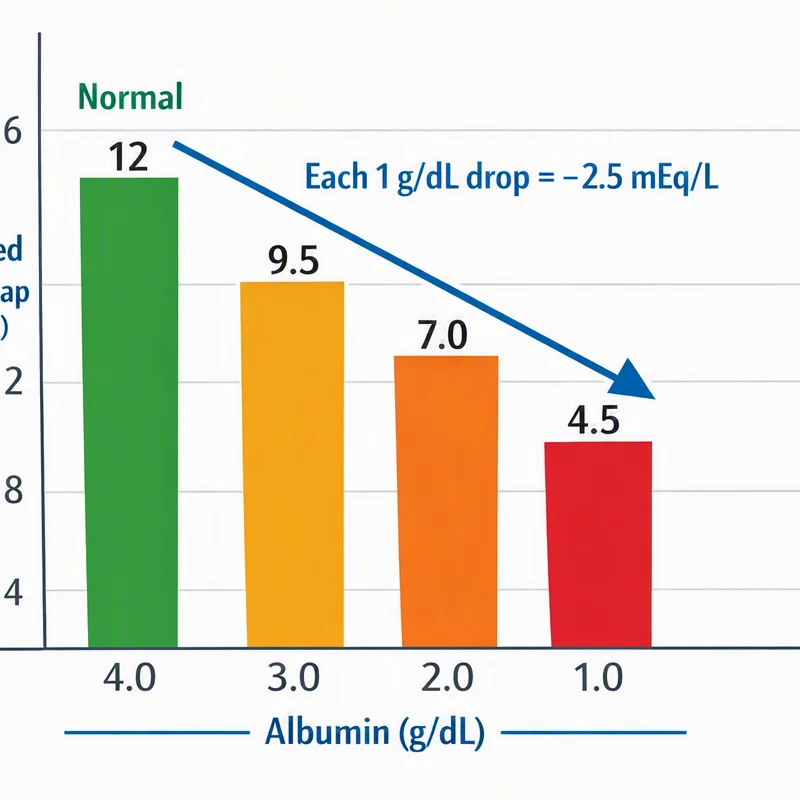
Albumin serves a major role in interpreting the anion gap because it is a significant negatively charged protein in the blood. When serum albumin is low, the measured gap often decreases as well. That means a patient with hypoalbuminemia may have a seemingly normal or only somewhat abnormal result even when an acid-base problem is present.
This is where albumin correction becomes important. By modifying the raw number for the albumin level, clinicians can calculate a more accurate corrected anion gap. The corrected value is often more revealing than the unadjusted number, especially in admitted patients or anyone with a significant protein abnormality.
The logic behind the correction is tied to protein binding and the overall charge balance in the bloodstream. Albumin contributes to the pool of unmeasured anions, so when it decreases, the gap decreases too. A corrected value helps recover that context and improves the chance of reaching a reliable interpretation.
This step matters because a missed albumin effect can obscure a real metabolic acidosis or other acid-base balance issue. For that reason, many clinicians view the corrected result as a better reflection of the true chemical state, especially when the rest of the serum chemistry panel suggests something more serious is going on.
When to Get Medical Interpretation
An anion gap result is especially helpful when it is considered with the rest of the blood test results. If the number is outside the normal range, or if it does not align with the patient’s symptoms, professional clinician interpretation is important. A value that appears minor on paper may be meaningful when combined with changes in blood pressure, breathing pattern, kidney function, or mental status.
You should also seek medical review when there are signs of electrolyte imbalance or concern about acid-base balance. Because the anion gap is only one part of a broader picture, it cannot distinguish every cause on its own. It is one piece of information in a much larger assessment of the body’s chemical state.
In practice, the result becomes more helpful when it is paired with other information from the serum chemistry panel, the patient’s history, and any medications that may influence the numbers. This kind of context helps determine whether the result is a benign variation, a lab artifact, or a sign of a clinically meaningful disorder.
If a value is surprisingly high or low, or if the result varies suddenly over time, that should prompt additional review. The anion gap calculator can help sort the numbers, but it cannot substitute for a medical evaluation. In other words, it supports decision-making, but it does not make the decision.
Frequently Asked Questions
What is the normal range for an anion gap?
The anion gap normal range varies by laboratory because different instruments and methods use slightly different reference range guidelines. Numerous labs show a range from the single digits to low teens, but the best answer is always the one listed with your specific laboratory values. If albumin is low, the uncorrected result may not represent the true picture.
How do you calculate the anion gap?
The usual anion gap formula is: sodium minus the sum of chloride and bicarbonate. In formula form, it is often written as anion gap = sodium - (chloride + bicarbonate). An anion gap calculator performs this calculation formula automatically based on values from a serum chemistry panel.
What does a high anion gap mean?
A high anion gap often points to metabolic acidosis. Common causes include lactic acidosis, ketoacidosis, and renal failure. It indicates that extra acids may be present in the blood or that bicarbonate has been consumed during an acid-base disturbance.
What can cause a low anion gap?
A low anion gap may be caused by hypoalbuminemia, multiple myeloma, lab error, or sometimes hypercalcemia. Because low values are less common, it is often important to verify the result and assess the rest of the electrolyte panel and clinical context.
Why does albumin change the anion gap?
Albumin is a major negatively charged protein that contributes to the blood’s overall charge balance. When serum albumin falls, the measured anion gap can also fall. That is why albumin correction may be needed to calculate a more accurate corrected anion gap and better understand the patient’s acid-base status.